Inside the Craft of Meat Seasoning: Why Simplicity Creates the Most Flavorful Steaks

Seasoning is one of the most misunderstood steps in grilling.
Many people assume that more spices mean more flavor. In reality, when it comes to high quality beef, restraint often delivers the most impressive results. The world’s most respected steakhouses and traditional Brazilian churrasco masters share a common philosophy: let the meat speak first.
Understanding the craft behind meat seasoning reveals why simple techniques consistently outperform heavy rubs and complicated marinades. When done correctly, minimal seasoning does not mean less flavor. It means cleaner, deeper, and more authentic flavor.
Let’s step inside the science and tradition that prove why less is often more.
What You Need to Know
The Philosophy Behind Minimalist Seasoning

At the heart of great steak is one guiding principle: quality beef already contains extraordinary flavor.
Premium cuts develop their signature taste through:
- Natural marbling
- Proper aging
- Careful handling
- Expert grilling
When too many spices are added, they can mask these natural characteristics. Instead of enhancing the meat, they compete with it.
Traditional Brazilian churrasco embraces this idea fully. The goal is not to transform the beef but to highlight what is already there. This is why many professional grill masters rely primarily on coarse salt as the primary seasoning.
It is not simplicity out of laziness. It is simplicity by design.
How Salt Unlocks Natural Beef Flavor
Salt is far more powerful than most diners realize.
When applied properly, it performs several critical functions that elevate grilled meat seasoning.
First, salt enhances umami, the savory depth that defines great beef. It amplifies existing flavor rather than covering it.
Second, salt improves moisture retention. As it dissolves into the surface, it helps proteins hold onto juices during cooking. The result is a steak that tastes richer and feels more succulent.
Third, salt supports crust formation. By drawing surface moisture outward and allowing it to evaporate, salt helps create the beautifully caramelized exterior associated with premium steakhouses.
In professional kitchens, this single ingredient often does more heavy lifting than an entire spice rack.
Timing: The Secret Partner to Seasoning
Seasoning is not only about what you use. It is about when you use it.
Timing dramatically affects how salt interacts with the meat.
Salting Just Before Grilling
This method, common in traditional churrasco, creates a pronounced surface crust while keeping the interior clean and beef-forward.
It works especially well when:
- The beef quality is high
- The grill temperature is strong
- The goal is bold exterior flavor
Salting in Advance
Allowing salt to rest on the meat for a longer period gives it time to penetrate deeper.
Benefits include:
- More evenly seasoned interior
- Slightly improved moisture retention
- Subtle flavor development
Both methods can be excellent when used intentionally. What matters most is understanding the goal for each cut.
Why Heavy Marinades Can Backfire

Marinades have their place, particularly for tougher cuts. But when applied to premium steaks, they often create unintended drawbacks.
Overly complex marinades can:
- Mask natural beef flavor
- Soften the exterior excessively
- Interfere with crust development
- Introduce competing flavor notes
In a premium steakhouse environment, the objective is clarity of flavor.
When guests approach the grill at BR77 and select a freshly prepared cut, the expectation is to taste the beef itself. The seasoning should support that experience, not dominate it. This is one reason minimalist seasoning remains the gold standard for high quality cuts.
The Role of Fire in Flavor Development
Seasoning does not work alone. It partners closely with heat.
High temperature grilling triggers the Maillard reaction, the chemical process that creates the rich brown crust and complex roasted flavors on steak.
Salt enhances this reaction by helping the surface dry and brown more efficiently.
Smoke adds subtle aromatic depth.
Together, fire and seasoning create layers of flavor that feel both simple and sophisticated.
When the fundamentals are strong, additional spices become less necessary.
Texture Protection: An Overlooked Benefit
Minimal seasoning also helps preserve the natural texture of the meat.
Heavy spice rubs can sometimes form thick coatings that:
- Prevent proper searing
- Burn at high temperatures
- Create uneven mouthfeel
By contrast, a light seasoning approach allows the grill to do its job cleanly.
The result is:
- Better crust integrity
- More consistent bite
- Cleaner mouthfeel
For guests who value the pure steakhouse experience, this difference is noticeable from the first cut.
How the BR77 Service Style Highlights Pure Flavor
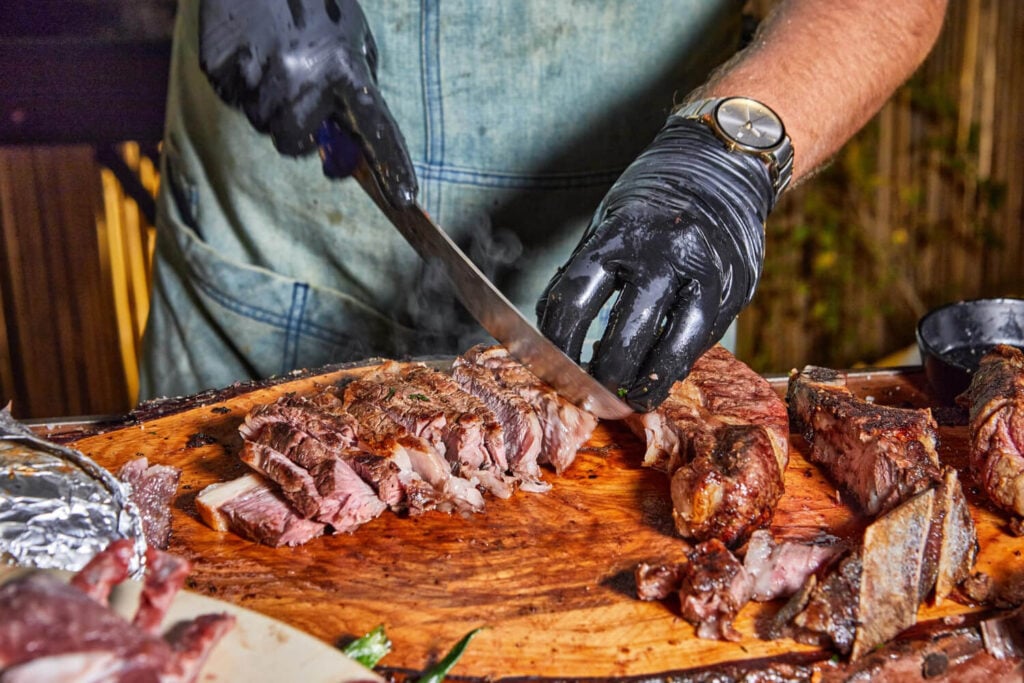
The BR77 dining format naturally complements the philosophy of simple seasoning.
Because guests walk up to the grill and choose their preferred cuts at their own pace, the focus stays on freshness and quality. There is no need to rush seasoning or mask flavors.
This approach offers several advantages.
Your dinner conversation flows without constant interruption.
You select exactly the cut you want, exactly when you want it.
Each portion is freshly sliced and served with its natural character intact.
The absence of circulating servers means the experience feels relaxed and intentional. It also reinforces the idea that great beef does not need excessive embellishment. When the meat is properly sourced and expertly grilled, simplicity shines.
Professional Signs of Properly Seasoned Meat
If you want to evaluate steak like an expert, look for these indicators.
The crust is evenly browned, not heavily coated.
The first bite tastes like beef first, seasoning second.
The interior remains juicy and balanced.
The finish is clean, not overly salty or spice-heavy.
These cues signal that the kitchen understands the art of minimalist steak seasoning.
When More Seasoning Does Make Sense
There are moments when additional seasoning is appropriate.
For example:
- Leaner cuts may benefit from light enhancement
- Poultry and pork often welcome more complexity
- Certain house specialties may feature signature rubs
The key is intentionality.
Professional kitchens know when to keep it simple and when to layer flavor. Mastery comes from knowing the difference.
Final Thoughts
Great steak does not need to be complicated.
In fact, the best results often come from restraint, precision, and respect for the ingredient. The philosophy that less is often more continues to guide the world’s top grill masters for a reason.
Salt, timing, and fire work together to unlock the full potential of premium beef. When these elements are handled with care, the result is clean, rich, deeply satisfying flavor.
At BR77, this approach aligns perfectly with the guest-controlled dining experience. You choose your cuts, you set your pace, and you enjoy beef prepared to highlight its natural excellence.
Because sometimes, the most powerful flavor move is knowing when to step back and let the meat speak.
Discover More Flavor with BR77 Steakhouse
Discover More Flavor with BR77 Steakhouse
Discover More Flavor with BR77 Steakhouse
Keep exploring our exclusive insights into Brazilian-style dining, grilling traditions and the unique flavors that make BR77 Steakhouse a true experience. Dive deeper into our blog and elevate your next visit.
Is salt really enough to season a good steak?
Yes. High quality beef often needs only salt to enhance its natural flavor when grilled properly.
Why do some steakhouses avoid heavy spice rubs?
Because strong rubs can mask the natural beef profile and interfere with crust development.
When should I use marinades instead of simple seasoning?
Marinades are most useful for tougher or leaner cuts that benefit from added moisture and flavor complexity.