Picanha 101: Why This Cut is the King of Brazilian Meats

If there is one cut of beef that defines Brazilian steakhouse culture, it is picanha. Revered by chefs, celebrated by diners, and instantly recognizable to anyone who loves churrasco, picanha is more than just a steak. It is a symbol of Brazilian culinary identity and a cornerstone of the rodizio experience.
In the United States, many diners first encounter picanha inside a Brazilian steakhouse, where it arrives sizzling, glistening with rendered fat, and carved tableside by skilled gaucho chefs. One bite is usually enough to understand why this cut has earned legendary status. Rich but balanced. Tender yet structured. Bold in flavor without being overpowering.
This guide explores everything you need to know about picanha. What it is, where it comes from, why Brazilians consider it the king of meats, and how it became the most anticipated cut in rodizio dining. Whether you are new to Brazilian BBQ or already a fan, understanding picanha will deepen your appreciation for the churrasco experience at BR77 Steakhouse.
What Exactly Is Picanha? Understanding the Cut

Picanha comes from the top portion of the sirloin, located near the rump of the cow. In Brazilian butchery, it is carefully separated to preserve one of its most defining features: a thick, creamy fat cap that runs across the top of the meat. This fat cap is not trimmed away. It is essential to what makes picanha extraordinary.
In the United States, this same cut is often broken down into different steaks or trimmed of its fat, losing much of its character in the process. Brazilian tradition treats picanha with deep respect, keeping it whole and allowing the fat to do what it does best during grilling: slowly render, baste the meat, and infuse it with flavor.
The muscle itself is naturally tender, with a fine grain that holds moisture beautifully. Unlike heavily marbled cuts, picanha relies on its fat cap rather than internal fat to deliver richness. This creates a unique eating experience. Each slice offers a contrast between the crisp, savory fat and the juicy, beef-forward interior.
When prepared correctly, picanha delivers intense beef flavor without heaviness. It is satisfying without being overwhelming, which is part of the reason it shines in rodizio service where guests enjoy multiple cuts throughout the meal.
In Brazilian steakhouses like BR77, picanha is typically folded into a C shape, skewered, seasoned simply with coarse salt, and grilled slowly over open flame. This method honors the integrity of the cut and highlights its natural strengths.
Why Picanha Became the King of Brazilian Meats
The rise of picanha to culinary royalty did not happen by accident. Its status is rooted in Brazilian history, culture, and the practical realities of churrasco cooking. Gauchos in Southern Brazil valued cuts that cooked well over open fire, required minimal seasoning, and could feed groups efficiently. Picanha checked every box.
Historically, picanha was not always the most expensive cut. It was appreciated for its balance of flavor and tenderness rather than luxury status. Over time, Brazilian cooks recognized that when treated properly, picanha consistently outperformed more famous cuts in taste and satisfaction.
Its fat cap played a crucial role in this reputation. In churrasco, fire is both friend and challenge. Lean cuts risk drying out, while overly fatty cuts can overwhelm the palate. Picanha sits perfectly in the middle. As it grills, the fat slowly melts, protecting the meat and enhancing flavor without excess grease.
Another reason picanha earned its crown is consistency. When sourced and prepared correctly, it delivers reliable results. Guests know what to expect, and what to expect is exceptional. This reliability made it a favorite at family gatherings, celebrations, and later in professional churrascarias.
Culturally, picanha represents abundance and hospitality. Serving it signals generosity and pride. In Brazil, offering picanha to guests is a gesture of respect and warmth. That cultural meaning carries into Brazilian steakhouses in the U.S., where picanha often becomes the most anticipated skewer of the night.
At BR77 Steakhouse, picanha is not just another cut in rotation. It is a signature. A moment guests look forward to. A slice that embodies the spirit of Brazilian BBQ.
How Picanha Is Prepared in Authentic Churrasco

The preparation of picanha is a masterclass in restraint. Unlike many modern steak preparations that rely on complex marinades or heavy seasoning, Brazilian churrasco lets the meat speak for itself.
The process begins with selecting high quality beef. The cut must have an intact fat cap of even thickness. Too thin and it loses its protective qualities. Too thick and it overwhelms the balance of the steak. Skilled butchers understand this balance intuitively.
Once portioned, the picanha is folded and skewered so that the fat cap faces outward. This positioning is intentional. As the skewer rotates over the fire, the fat renders slowly, dripping just enough to baste the meat while also creating bursts of aroma as it hits the coals.
Seasoning is typically limited to coarse salt. This might surprise diners accustomed to heavily seasoned steaks, but it is precisely this simplicity that elevates picanha. Salt enhances the beef’s natural flavor without masking it.
The grilling process is unhurried. Picanha is cooked over medium heat rather than intense direct flame. This allows the fat to render gradually and the meat to remain juicy. Gaucho chefs monitor the skewer constantly, adjusting distance from the fire to achieve the perfect balance of char and tenderness.
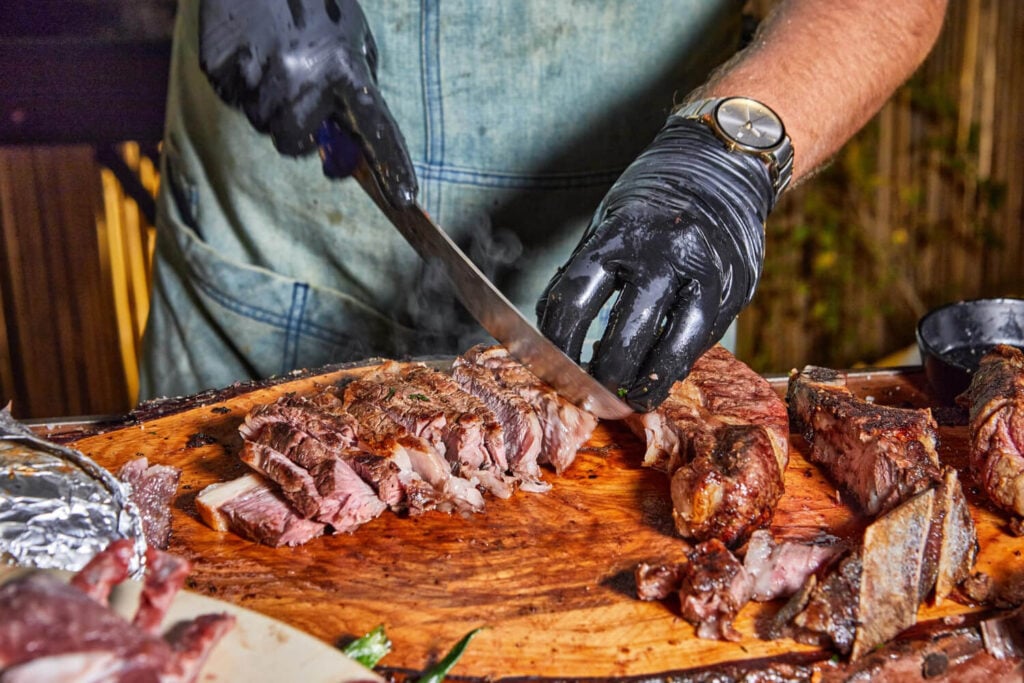
At the table, picanha is carved directly from the skewer in thin slices. Each slice includes a strip of fat and a portion of meat, ensuring that every bite delivers the full experience. This tableside carving is not just theatrical. It preserves heat, texture, and aroma.
The result is a steak that feels indulgent yet refined. Crisp edges, juicy center, and a depth of flavor that lingers without fatigue.
Picanha vs. Other Steakhouse Cuts: What Makes It Different
American steakhouse culture often celebrates cuts like ribeye, filet mignon, or New York strip. While each has its merits, picanha occupies a distinct category that sets it apart.
Compared to ribeye, picanha is less marbled internally but offers richness through its fat cap. This creates a cleaner beef flavor without sacrificing juiciness. It feels lighter on the palate, especially when enjoyed in multiple servings during rodizio dining.
Compared to filet mignon, picanha offers significantly more flavor. Filet is prized for tenderness but lacks the robust beefiness that many diners crave. Picanha balances tenderness with intensity, making it more satisfying bite for bite.
Compared to sirloin or strip steak, picanha delivers a more dynamic texture. The interplay between crisp fat and tender meat adds complexity that flat cuts cannot replicate.
Another key difference is how picanha is served. In Brazilian steakhouses, it is not a single plated steak. It is part of a flowing experience. Guests enjoy multiple slices at optimal temperature, carved fresh, rather than a steak that cools as it sits.
This service style enhances everything that makes picanha special. It stays juicy. It stays aromatic. And it invites diners to savor rather than rush.
For many American guests, picanha becomes a revelation. It challenges assumptions about what makes a great steak and introduces a new benchmark for flavor-driven beef.
Why Picanha Shines in Rodizio Dining at BR77 Steakhouse
Rodizio dining is about variety, rhythm, and discovery. Not every cut thrives in this format, but picanha is perfectly suited for it. Its balanced richness allows guests to enjoy multiple servings without fatigue, making it ideal for continuous tableside service.
At BR77 Steakhouse, picanha often anchors the churrasco experience. It appeals to first-time guests and seasoned Brazilian steakhouse fans alike. The familiar yet distinctive flavor makes it approachable, while the preparation elevates it beyond everyday steak.
The visual impact of picanha also enhances the experience. Seeing the skewer arrive, hearing the sizzle as it’s carved, and catching the aroma of rendered fat all contribute to anticipation. Dining is not just about taste. It is about engagement.
Picanha also pairs beautifully with traditional sides and beverages. Its richness complements fresh market table selections, bright salads, and classic Brazilian accompaniments. It also pairs well with bold red wines, caipirinhas, or crisp beers, enhancing the overall meal.
From a culinary perspective, picanha reflects everything BR77 stands for. Respect for tradition. Commitment to quality. And an understanding that great food does not need unnecessary embellishment.
When guests leave BR77 talking about their meal, picanha is often the cut they remember most. It becomes the reference point by which all other steaks are judged.
Conclusion
Picanha is not just another steak. It is the heart of Brazilian churrasco and the undisputed king of Brazilian meats. Its unique combination of flavor, texture, and cultural significance has earned it a place of honor in Brazilian cuisine and in the hearts of diners across the United States.
Understanding what makes picanha special transforms the dining experience. Each slice becomes more meaningful when you know the history, technique, and intention behind it. At BR77 Steakhouse, picanha is more than a menu item. It is a celebration of Brazilian identity, craftsmanship, and hospitality.
Whether it’s your first taste or your favorite return indulgence, picanha invites you to slow down, savor, and appreciate the art of churrasco at its finest.
Discover More Flavor with BR77 Steakhouse
Keep exploring our exclusive insights into Brazilian-style dining, grilling traditions and the unique flavors that make BR77 Steakhouse a true experience. Dive deeper into our blog and elevate your next visit.
FAQ
What is picanha called in the United States?
In the U.S., picanha is often referred to as top sirloin cap or coulotte, though it is frequently trimmed differently than the Brazilian version.
Why does picanha have a fat cap?
The fat cap is essential for flavor and moisture. It renders during grilling, basting the meat and creating a rich, balanced taste.
Is picanha always served medium at Brazilian steakhouses?
Picanha is typically served medium to medium rare to preserve tenderness and juiciness, but gaucho chefs can adjust doneness based on guest preference.