Churrasco vs. American BBQ: What’s the Difference?

Few things bring people together like food cooked over fire. Across cultures, grilling and barbecuing are more than cooking methods. They are expressions of identity, tradition, and community. In the United States, American BBQ holds legendary status, with regional styles, secret sauces, and slow-smoked meats that inspire devotion. In Brazil, churrasco is equally revered, built on open flames, premium cuts, and a philosophy of simplicity and abundance.
At first glance, churrasco and American BBQ may seem similar. Both celebrate meat, fire, and gathering around the table. But look closer, and the differences are profound. From how the meat is prepared to how it is served, these two traditions reflect very different cultural values and culinary priorities.
This guide explores the true differences between churrasco and American BBQ. Not to declare a winner, but to help diners understand what makes each tradition special. Whether you are a lifelong BBQ enthusiast or discovering Brazilian steakhouse dining for the first time, understanding these distinctions deepens your appreciation for both.
The Origins: Cultural Roots Behind the Fire
Every great food tradition begins with a way of life. American BBQ and Brazilian churrasco were shaped by geography, history, and the daily realities of the people who created them.
American BBQ traces its roots to Indigenous cooking methods, European influences, and the ingenuity of enslaved Africans in the southern United States. Smoking meat low and slow over wood became a practical solution for preserving tough cuts and transforming them into tender, flavorful dishes. Over time, this evolved into regional styles across the U.S., each with its own techniques, sauces, and rituals.
Brazilian churrasco was born on the Pampas of Southern Brazil, where gauchos, the region’s cowboys, spent long days herding cattle across vast grasslands. With abundant beef and open land, gauchos cooked large cuts of meat over open flames using simple tools and minimal seasoning. Fire was central, but speed and freshness mattered more than long smoking.
These origins shaped everything that followed. American BBQ became a celebration of patience, transformation, and regional identity. Churrasco became a celebration of quality ingredients, technique, and communal abundance.
Understanding these roots helps explain why the two traditions feel so different when experienced at the table.
Cooking Methods: Smoke vs. Flame
One of the most significant differences between churrasco and American BBQ lies in how the meat is cooked.
American BBQ is defined by low temperatures and long cooking times. Meat is typically smoked for hours, sometimes overnight, using indirect heat. Wood choice matters deeply, with hickory, oak, mesquite, or fruitwoods contributing distinct flavor profiles. The goal is to break down connective tissue, infuse smoke, and achieve deep tenderness.
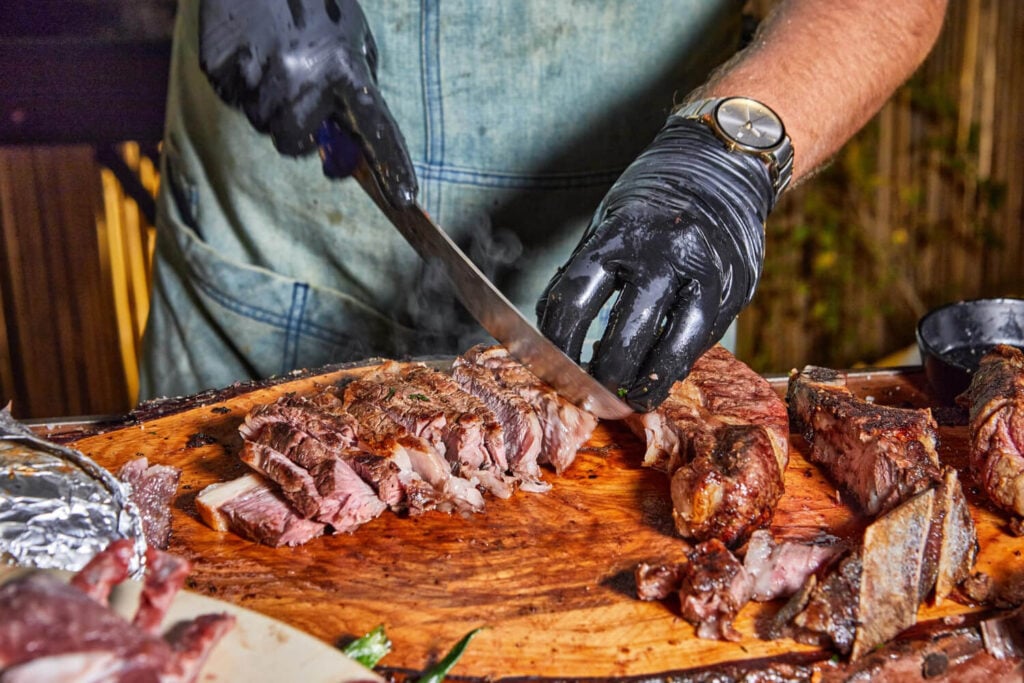
Churrasco, by contrast, relies on direct heat and open flames. Meat is cooked relatively quickly compared to American BBQ, though still with careful control. Skewers are placed near hot coals, not smoke chambers, and rotated to ensure even cooking. The focus is on developing a flavorful crust while preserving juiciness inside.
Smoke plays a subtle role in churrasco, but it is never dominant. The fire enhances the natural flavor of the beef rather than transforming it. This is why churrasco places such importance on premium cuts. When seasoning is minimal and cooking is direct, the quality of the meat must shine.
In American BBQ, technique compensates for tougher cuts. In churrasco, technique showcases already excellent cuts. Neither approach is superior. They simply reflect different philosophies of fire cooking.
Seasoning and Sauces: Simplicity vs. Signature Flavors
Seasoning is another area where the two traditions diverge dramatically.
American BBQ is known for bold flavors layered through dry rubs, marinades, and sauces. Spice blends can include paprika, sugar, garlic, pepper, chili, and dozens of other ingredients. Sauces range from sweet and sticky to tangy and vinegar-forward, often applied generously before, during, or after cooking.
These flavors are deeply tied to regional identity. Kansas City, Texas, Carolina, and Memphis BBQ each tell a different story through seasoning and sauce. For many BBQ lovers, sauce is as important as the meat itself.
Churrasco takes the opposite approach. Traditional Brazilian churrasco uses little more than coarse salt. This simplicity is intentional. The goal is not to mask flavor but to enhance it. When a cut like picanha hits the grill, its natural richness does the heavy lifting.
Sauces exist in Brazilian cuisine, but they play a supporting role. Items like chimichurri-style vinaigrettes or fresh tomato-based condiments add brightness rather than intensity. They are optional accents, not the foundation of flavor.
This contrast reflects cultural values. American BBQ celebrates personalization and bold expression. Churrasco celebrates restraint, balance, and respect for the ingredient.
Cuts of Meat: Transformation vs. Celebration

The types of meat used in each tradition also highlight fundamental differences.
American BBQ often focuses on tougher, collagen-rich cuts such as brisket, pork shoulder, ribs, and sausages. These cuts require long cooking times to become tender and flavorful. The magic of BBQ lies in transforming something tough into something extraordinary through time and technique.
Churrasco focuses on naturally tender cuts of beef. Picanha, top sirloin, filet, and ribs are prepared in ways that preserve their inherent qualities. The cooking process is about precision rather than transformation.
This difference affects how the meal unfolds. In American BBQ, a single cut may be the star of the meal, served in generous portions after hours of preparation. In churrasco, diners enjoy a rotation of meats, each prepared and served at its optimal moment.
The variety is intentional. Churrasco invites exploration. American BBQ invites deep appreciation of one carefully crafted centerpiece.
Dining Experience: Plates vs. Flow
Perhaps the most noticeable difference for diners is how the food is served.
American BBQ is typically a plated experience. Guests order specific items, which arrive all at once or in courses. The meal has a clear beginning and end, often centered around a single main protein.
Churrasco is experiential and continuous. In a rodizio-style steakhouse, gaucho chefs circulate through the dining room with skewers of meat, carving slices tableside. Guests control the pace using signaling systems, creating a personalized flow of flavors.
This format changes how people eat. Instead of committing to one choice, diners sample many cuts. Instead of rushing, they settle into a rhythm. The experience feels abundant yet controlled.
Socially, churrasco encourages conversation and shared discovery. American BBQ encourages anticipation and celebration of the finished product. Both create memorable moments, but in very different ways.
Time and Ritual: Waiting vs. Engaging
Time plays a symbolic role in both traditions.
In American BBQ, waiting is part of the ritual. Pitmasters rise early, tend fires for hours, and guests understand that great BBQ cannot be rushed. The anticipation builds respect for the craft and the cook.
In churrasco, the ritual happens at the table. The engagement is immediate. Guests interact with gaucho chefs, watch the carving, smell the fire, and participate actively in the experience.
Neither tradition is rushed, but they express time differently. BBQ honors patience before the meal. Churrasco honors presence during the meal.
This difference influences atmosphere. BBQ joints often feel casual, rustic, and rooted in local tradition. Brazilian steakhouses like BR77 Steakhouse feel energetic, social, and celebratory, blending tradition with polished hospitality.
Why Both Traditions Thrive in the United States

The United States has embraced both American BBQ and Brazilian churrasco because they satisfy different cravings.
American BBQ speaks to nostalgia, regional pride, and comfort. It is often tied to family gatherings, road trips, and local legends. It feels personal and deeply American.
Churrasco appeals to diners seeking something immersive and global. It offers abundance without chaos, indulgence without heaviness, and cultural richness without intimidation. For many American guests, it feels exciting yet approachable.
At BR77 Steakhouse, churrasco introduces diners to a tradition that values quality, simplicity, and hospitality. It does not compete with American BBQ. It complements it by offering a different expression of fire, meat, and gathering.
Understanding the differences allows diners to appreciate both without comparison fatigue. There is room at the table for smoke and flame, sauce and salt, patience and immediacy.
Conclusion
Churrasco and American BBQ are united by fire but separated by philosophy. One transforms meat through time and smoke. The other celebrates meat through simplicity and flame. One tells stories through sauces and regional styles. The other tells stories through technique, tradition, and abundance.
Neither is better. Both are deeply meaningful. Together, they show how universal the love of fire-cooked food truly is.
For diners exploring Brazilian churrasco at BR77 Steakhouse, understanding these differences adds depth to every bite. It reveals why churrasco feels the way it does and why it holds such a special place in Brazilian culture.
In the end, whether you prefer smoke or flame, sauce or salt, what matters most is the shared experience around the table. That is where both traditions truly shine.
Discover More Flavor with BR77 Steakhouse
Keep exploring our exclusive insights into Brazilian-style dining, grilling traditions and the unique flavors that make BR77 Steakhouse a true experience. Dive deeper into our blog and elevate your next visit.
FAQ
Is churrasco the same as barbecue?
No. While both involve cooking meat over fire, churrasco uses direct heat and minimal seasoning, while American BBQ relies on low heat, smoke, and bold flavors.
Why doesn’t churrasco use heavy sauces?
Churrasco focuses on highlighting the natural flavor of premium cuts, using salt and fire rather than sauces to enhance taste.
Can someone who loves American BBQ enjoy churrasco?
Absolutely. Many BBQ fans appreciate churrasco for its quality meats, variety, and interactive dining experience, even though the flavors and techniques differ.